
Do You Need a License to Be a Chaplain?
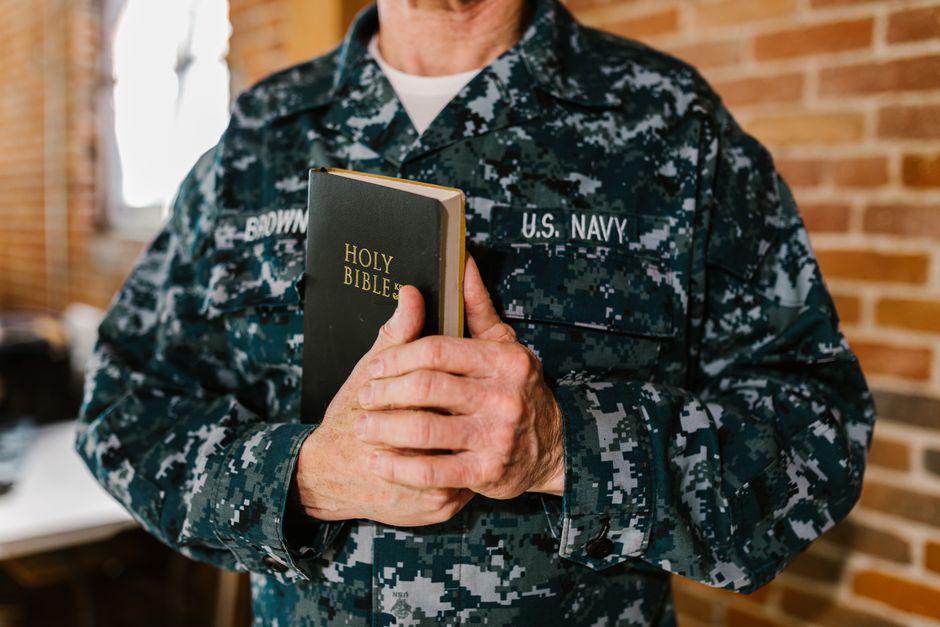
Usually, there is no single state or federal chaplain license that applies to every chaplain job in the United States. Requirements depend on the employer and setting. Professional board certification is a separate credential, and some employers require or prefer it; others set their own qualifications. Check the specific job posting and ask the hiring organization which credentials it accepts.
Do you need a state license to be a chaplain?
In general, the sources here do not establish a universal state chaplain license; instead, they show that hiring organizations set qualifications for many chaplain roles. That distinction matters: a job title alone does not tell you whether the position requires a particular degree, clinical training, endorsement, or professional certification.
For federal Chaplain Series 0060 positions, the U.S. Office of Personnel Management says there is no OPM qualification standard for the series and that agencies establish their own qualifications. That is a concrete example of employer-set requirements rather than one uniform federal chaplain license.
Separate the terms before you apply:
- Licensure generally refers to authorization issued under a government licensing system. The sources provided do not identify a general state chaplain license that applies across settings.
- Certification is a professional credential issued by a certifying organization after its requirements are met. BCCI, for example, awards Board Certified Chaplain and Associate Certified Chaplain credentials through its certification process.
- Endorsement or recognition refers to support or recognition by a faith group; BCCI includes current faith-group endorsement or recognition in its credential requirements.
- Employer qualification means the criteria an organization sets for a particular job, which may include some or all of the above.
Use a precise question when you contact an employer: “For this position, do you require a government license, a specific board certification, faith-group endorsement, or another qualification?” That wording makes the hiring team identify the credential rather than answer vaguely about being “licensed.”
Is chaplain certification the same as a license?
No. Chaplain certification is a professional credential, not automatically a state license. The issuer, requirements, and purpose differ: a certifying organization evaluates candidates under its own criteria, while an employer decides which credentials it will accept or require for a role.
BCCI describes Board Certified Chaplain (BCC) and Associate Certified Chaplain (ACC) as credentials awarded through its certification process. Its current BCC criteria include a qualifying master’s degree, 72 graduate semester hours, four units of Clinical Pastoral Education (CPE), current faith-group endorsement or recognition, at least 2,000 hours of chaplain work or volunteer experience after the required CPE, and demonstrated competence. Its ACC criteria include 48 graduate semester hours, two CPE units, endorsement or recognition, and 2,000 qualifying experience hours.
Those are substantial, specific pathways—not a definition of what every chaplain employer requires. BCCI says qualifying experience can include work in healthcare, prisons, or corporate chaplaincy; documented volunteer hours may count, while parochial ministry hours do not. If a job asks for certification, confirm which certifying body it recognizes and whether your credential level satisfies the posting.
The VA illustrates how certification can become a job requirement without becoming a universal license. Its National Chaplain Service lists board-certifying organizations it recognizes and says board certification is needed for GS-11 chaplains and above; it also lists accepted CPE units for non-board-certified GS-09 chaplains. The requirement is tied to VA job grade and employer rules.
Can I work as a chaplain without board certification?
Yes, some chaplain roles may be available without board certification, but eligibility depends on the employer and position. Do not assume certification is optional—or mandatory—based on the word “chaplain” alone; check the exact role.
The National Association of Catholic Chaplains (NACC) says many employers require certification or heavily favor certified candidates in hiring and salary decisions. It also says board certification is frequently required in hospitals, hospices, military, and other institutional settings. NACC presents its Certified Associate Chaplain credential as a foundational-level pathway and encourages it for some per-diem, part-time, on-call, prison-ministry, first-responder, and port-ministry roles.
Hospice requirements show why the setting and the exact rule matter. Federal hospice regulations require an interdisciplinary group that includes a qualified and competent pastoral or other counselor. They also require hospices to assess patients’ and families’ spiritual needs and provide counseling consistent with their beliefs and wishes. The cited provisions describe the role and service, but do not specify a particular degree, number of CPE units, or board certification for that counselor role.
Use this short verification checklist before investing time in an application:
- Read the posting closely. Mark every credential, education, training, endorsement, and experience requirement.
- Ask what “certified” means. Request the accepted certifying bodies and credential level, especially when the posting uses broad wording.
- Confirm your experience counts. If the certifier or employer requires hours, ask whether your specific paid or volunteer work qualifies.
- Check the employer’s setting-specific rules. For federal roles, review the agency announcement; for VA roles, note the grade and stated certification expectations.
- Get clarification in writing. A useful message is: “Could you confirm which credentials are required at application and which may be completed after hire?”
The practical rule is simple: treat certification as a professional credential and the posting as the decision point. Verify the credentialing body, level, and timing with the employer before you assume that a license or certification will qualify you for the job.
Frequently Asked Questions
Do chaplain requirements differ in hospitals, hospices, and prisons?
Yes. Requirements depend on the employer and role. NACC says board certification is frequently required in hospitals and hospices, while BCCI recognizes qualifying chaplain experience in healthcare and prisons; federal hospice rules describe a qualified and competent pastoral or other counselor without specifying a particular degree, CPE count, or board certification.
How can I check which credentials an employer requires?
Read the specific job posting, then ask the hiring contact to confirm the required certification body, education, CPE units, faith-group endorsement, and experience. For federal roles, check the agency’s announcement and applicable agency requirements; OPM says agencies establish qualifications for Chaplain Series 0060 positions.
Sources
- U.S. Office of Personnel Management — Chaplain Series 0060
- Board of Chaplaincy Certification, Inc. — Qualifications for Board Certified and Associate Certified Chaplains
- U.S. Department of Health and Human Services — 42 CFR Part 418, Subpart C
- U.S. Department of Veterans Affairs — Board-Certifying Chaplain Organizations
- National Association of Catholic Chaplains — Certification